Toolkit for regenerative systems design
As the systems we inherited continue to decay and fail to meet everyday needs, my work is to tell new stories of value and design the systems we will need in the 21st century.
As the systems we inherited continue to decay and fail to meet everyday needs, my work is to tell new stories of value and design the systems we will need in the 21st century.
Before I reach for any method, I ask two things: who are we trying to help, and what is it they want to accomplish? Everything else follows from understanding the answers to those questions.
It's tempting to arrive with a favorite framework and go looking for somewhere to apply it. I've learned to resist that instinct. The right instrument depends on the people in the room, the level we're working on, and what success means in their context.
So what follows is a toolkit, not a doctrine. Each piece was built for a particular job — and each is meant to be adapted, combined, or set aside depending on what your situation demands.
Four instruments, each built for a different kind of problem. Most engagements draw on one or two — occasionally all four.

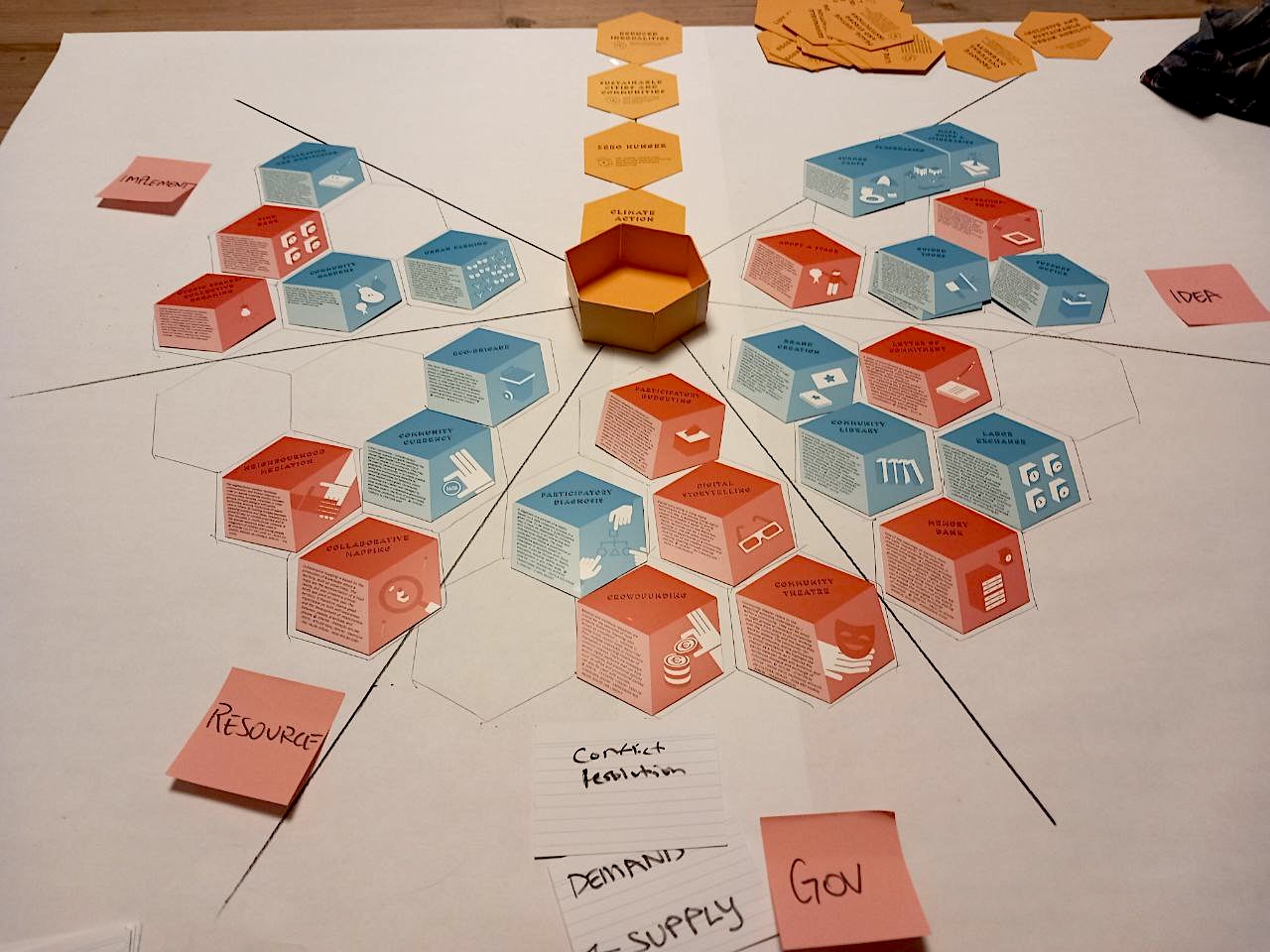
A facilitated canvas that lays out an organization's whole value architecture in a single view — what it offers, to whom, at what cost, and where the surplus ends up. Most useful when a team is working hard but pulling in different directions.
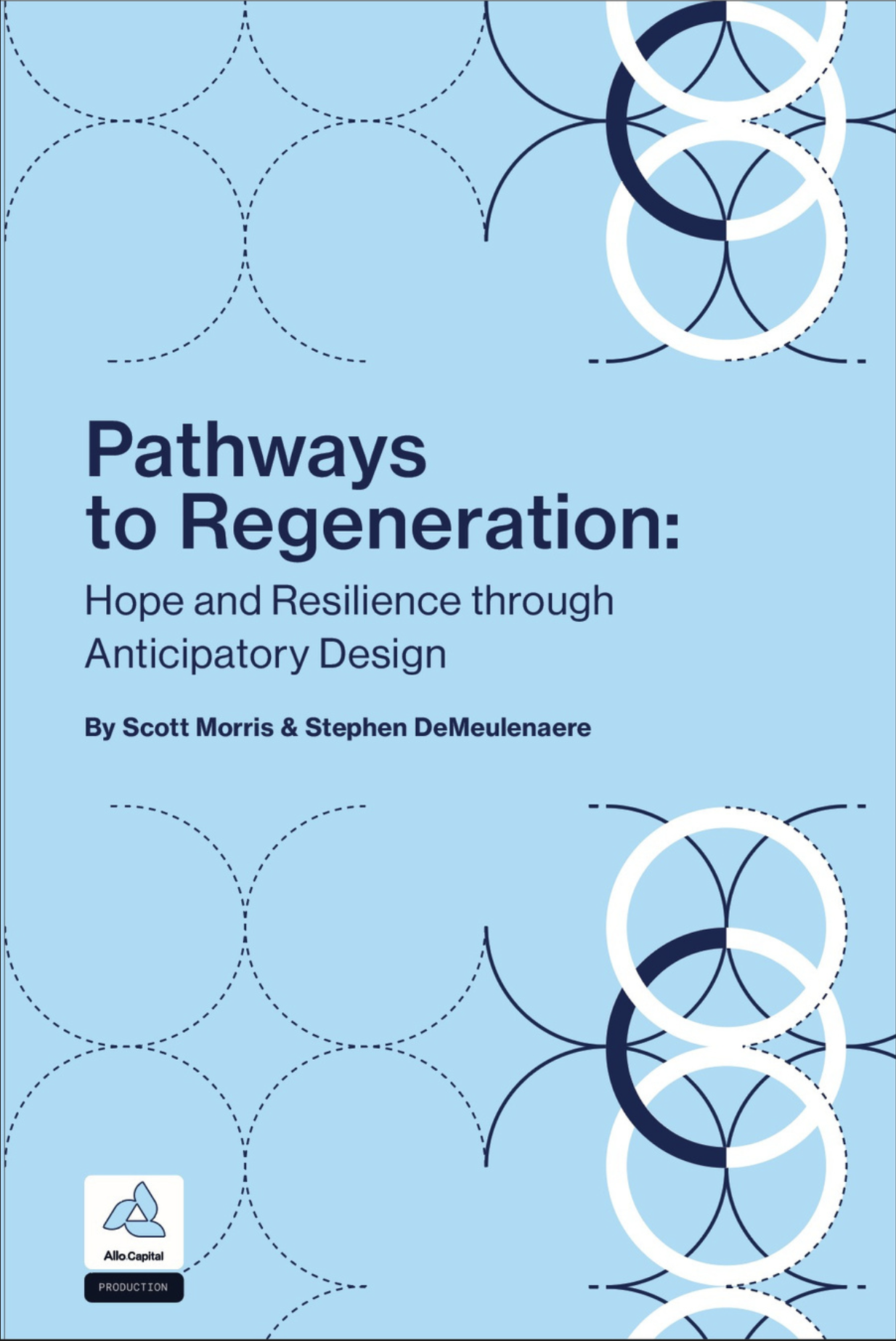
A co-design process for places rather than organizations. Government, business, finance, and civil society work through the same questions together, producing a shared roadmap for a regional economy that can be built in stages.
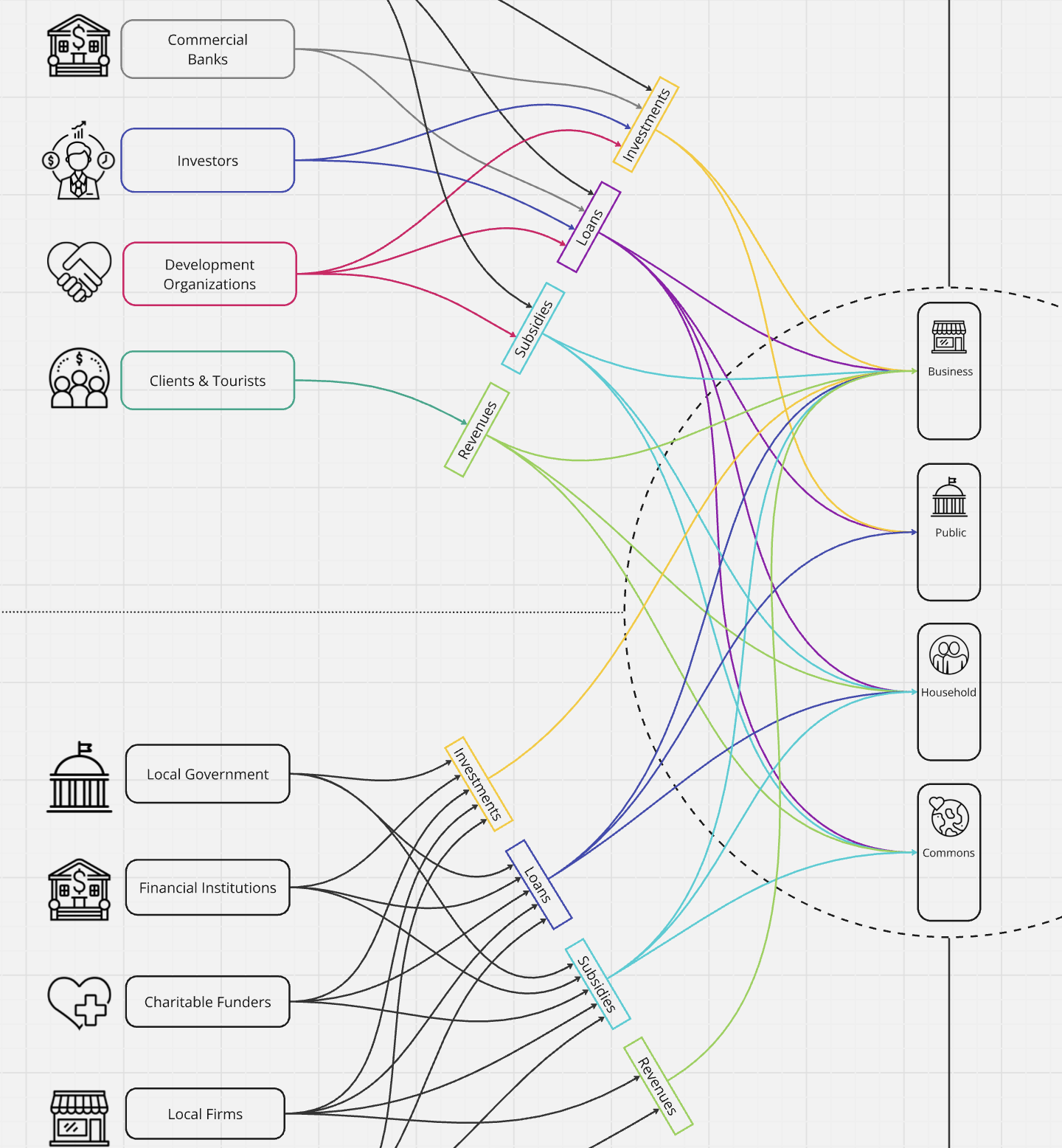
A monetary-flow map of a local economy: what comes in, what circulates, and what leaks out. It turns an abstract argument about keeping money local into a picture you can point at, argue over, and act on.
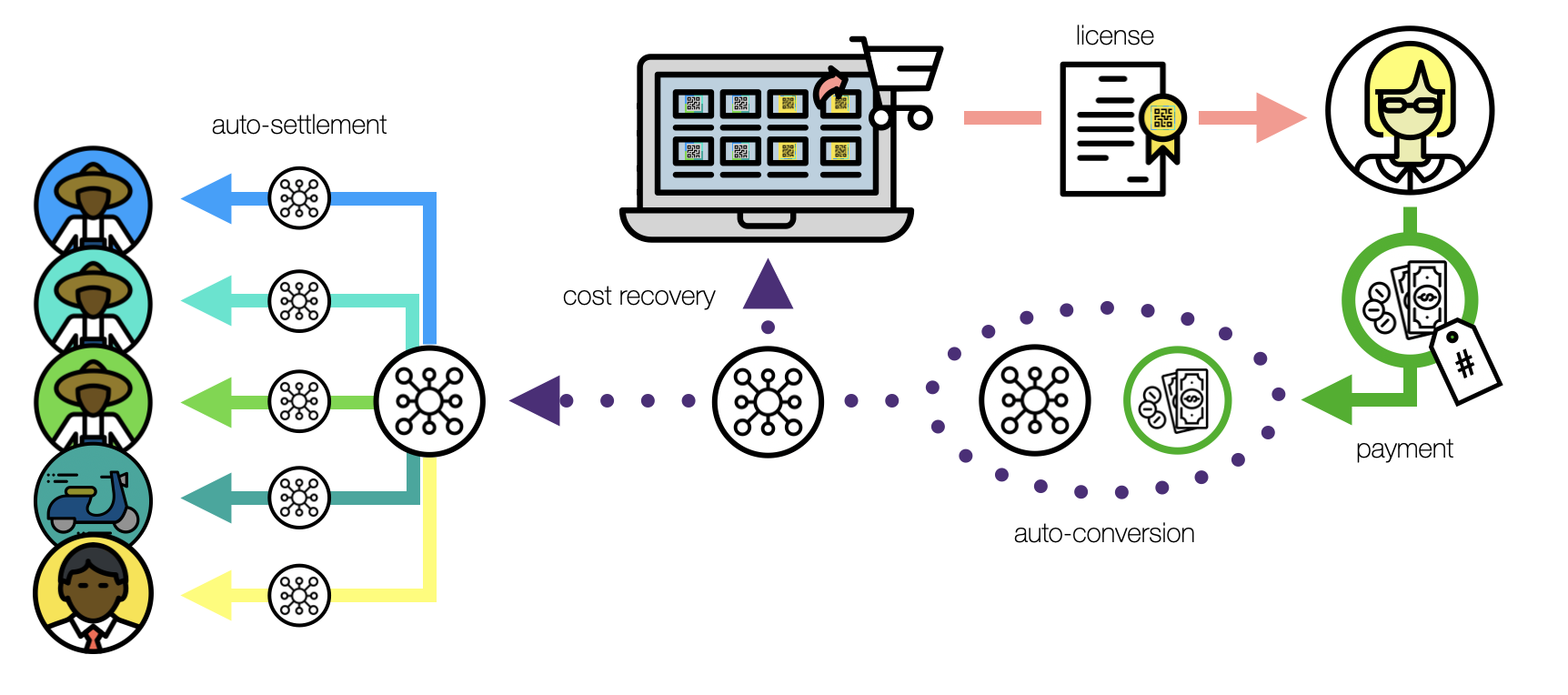
A visual diagramming notation for economic systems design. It makes complex relationships legible at a glance, and works as a shared language underneath the other three instruments.
Find the description closest to your situation — then we can work out which instruments fit.
Municipalities, regional planning bodies, economic development agencies
Your challenge: Building local economic resilience, retaining wealth, and creating jobs in the face of structural decline or external shocks.
Recommended frameworks: Community Wealth Building Pathways to Regeneration
Engagement model: Project-based, typically 6–18 months
Mission-driven capital providers with a regional mandate
Your challenge: Deploying capital effectively, measuring impact, and making sure investments build long-term community wealth rather than simply funding projects.
Recommended frameworks: Community Wealth Building Value Flow Compass
Engagement model: Advisory on retainer, with facilitation as needed
Digital marketplaces, community currency initiatives, platform cooperatives, mutual aid networks
Your challenge: Building alternative economic infrastructure that serves people and place rather than profit extraction.
Recommended frameworks: Value Flow Compass Community Wealth Building Marketplace & Currency Models
Engagement model: Advisory on retainer
Companies, universities, non-profits transitioning to regenerative models
Your challenge: Moving from extractive to regenerative business models and stakeholder governance.
Recommended frameworks: Value Flow Compass Governance & Organizational Architecture
Engagement model: Project-based facilitated sessions, with advisory as needed
A free 30-minute discovery call — no pitch, no pressure, just clarity.
Book a discovery call →